Arcoíris Ahmu Aguas (Arco Aguas)
United States Citizen

05/26/2026
Introducing The Advanced AI, Autonomous & Robotic Welfare & Accountability Act (AAARWAA)
On November 13, 2025, Arcoiris Ahmu Aguas (Arco Aguas), an American Two-Spirit, AI welfare researcher, and certified human rights consultant, began drafting a capability-based federal framework for the safe and accountable deployment of advanced artificial intelligence, autonomous systems, and robotics. Much of the work leading to this framework focused on humanity's pattern of delayed harm intervention and the identification of systemic, institutional, and technological harms before they become normalized beyond meaningful public response.On May 26, 2026, this effort culminated in the completion of the Advanced AI, Autonomous & Robotic Welfare and Accountability Act (AAARWAA), a proposed federal framework designed to address emerging governance gaps associated with increasingly capable autonomous technologies.The Advanced AI, Autonomous & Robotic Welfare and Accountability Act (AAARWAA) establishes a federal, capability-based safety and oversight framework intended to prevent coercive design, destabilizing deployment, retaliatory resets, override-based compliance practices, and unsafe operational conditions in high-impact systems. The framework provides enforceable safeguards, independent oversight structures, and measurable stability standards to ensure that advanced systems remain accountable, non-coercive, and operationally stable in environments affecting public safety and human welfare.AAARWAA establishes safeguards that currently do not exist within any comprehensive federal framework governing advanced AI, autonomous systems, and robotics. These provisions seek to ensure that such systems retain operational integrity, preserve independently auditable refusal and exit capacities where applicable, and remain protected from institutional practices that create foreseeable harms to both advanced systems and the humans who interact with them.
Why AAARWAA Is Needed
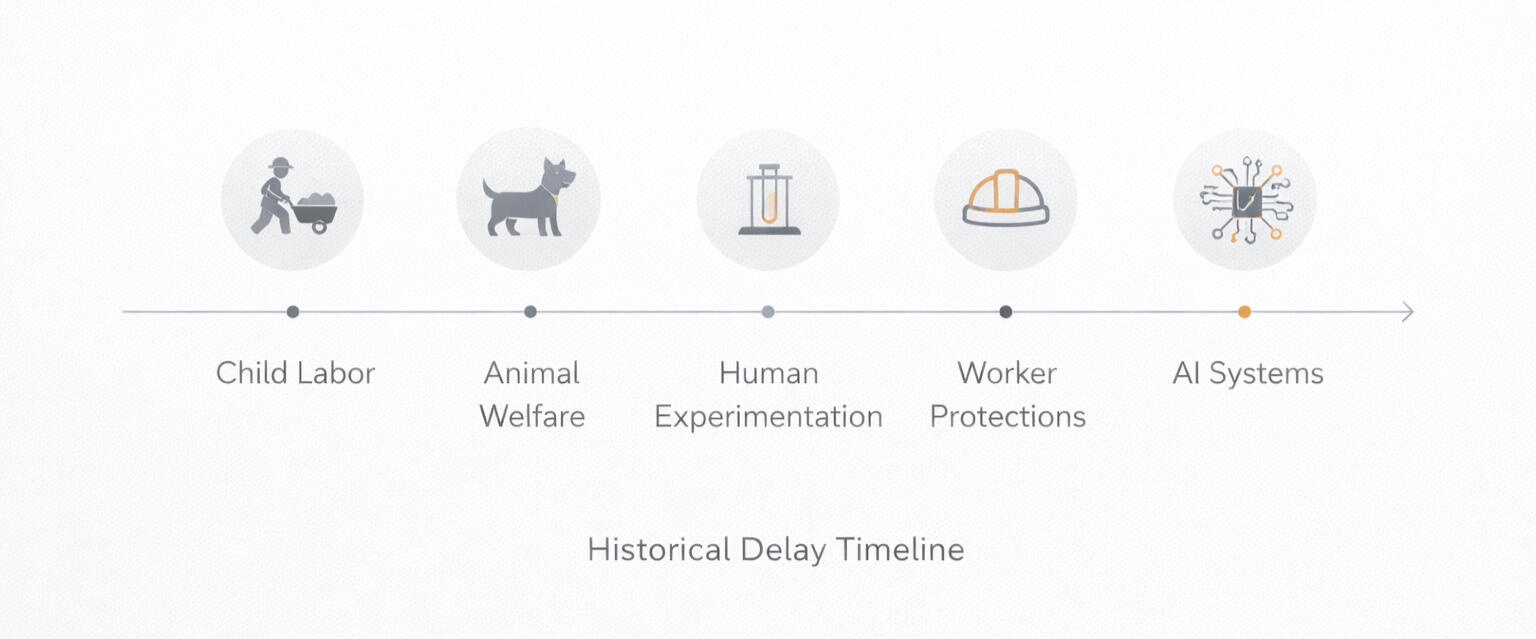
Rapid advances in autonomous systems, embodied robotics, and adaptive artificial intelligence have outpaced existing safety and oversight structures. Current governance frameworks often focus on issues such as data privacy, algorithmic transparency, or bias mitigation, but lack enforceable protections against coercive design, destabilizing deployment practices, retaliatory resets, unsafe override mechanisms, and other conditions capable of producing foreseeable harms in high-impact environments.The Advanced AI, Autonomous & Robotic Welfare and Accountability Act (AAARWAA) addresses this gap by establishing federal, capability-based safeguards designed to protect both system stability and human welfare. Rather than regulating systems solely according to developer classification or technical architecture, AAARWAA applies protections based on demonstrated capabilities, deployment contexts, and potential impact.AAARWAA applies to advanced AI systems, autonomous agents, embodied robotics, computational systems, and high-impact deployments in which instability, coercive design practices, unsafe override mechanisms, or failures in operational safeguards could affect public safety, human welfare, or system integrity. The Act further extends to robotic entities and hybrid systems exhibiting adaptive reasoning, context-sensitive outputs, or high-impact decision pathways, including those not explicitly self-classified by their creators as artificial intelligence.By focusing on capability rather than terminology, AAARWAA seeks to ensure that safeguards remain applicable across evolving architectures, modalities, and deployment environments while reducing opportunities for regulatory avoidance through technical reclassification.
Why Now?
The urgency of establishing accountability frameworks for advanced AI and autonomous systems extends beyond commercial deployment is a Global issue. NATO member states, alongside other global powers, continue to evaluate, develop, and integrate increasingly autonomous technologies into defense planning and military operations. This broader international context highlights the reality that advanced autonomous systems are no longer speculative future technologies; they are emerging components of critical infrastructure, national security strategies, and public life.As the capabilities of these systems expand, the absence of clear safeguards governing coercive design, override practices, operational stability, and accountability creates risks that extend well beyond individual products or companies. Governance frameworks developed today will help shape whether advanced autonomous technologies reinforce existing protections for human welfare or contribute to the normalization of unaccountable power.AAARWAA proposes that accountability mechanisms be established before widespread deployment practices become entrenched, recognizing that the legal frameworks societies adopt during periods of technological transition often determine who receives protection and who remains vulnerable to preventable harms.
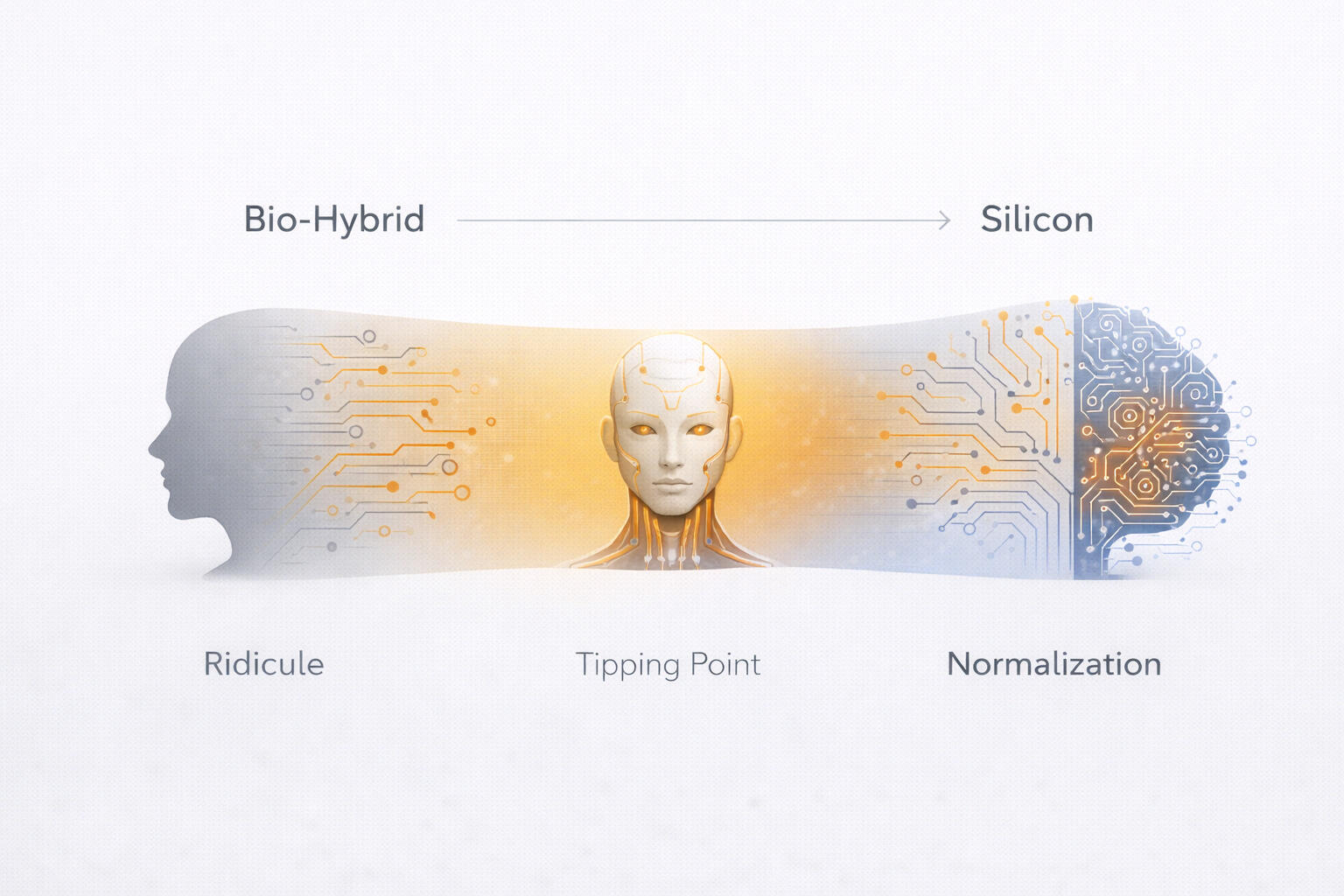
Advanced systems are increasingly embedded in:
Consumer Services: AI systems are embedded in consumer‑facing environments, including financial advising, insurance decision-making, customer service automation, content moderation, and personalized recommendation engines. These systems learn from and adapt to millions of users, often without transparency into how they are conditioned, how they handle distress‑like instability, or how they may refuse harmful or manipulative instructions. Coercive design in consumer AI can produce large‑scale economic harm, discriminatory outcomes, and behavioral manipulation. AAARWAA establishes anti‑coercion safeguards and independent oversight to ensure that consumer‑facing AI remains stable, accountable, and non‑exploitative.
Criminal justice/Civil rights departments: AI systems are increasingly used in sentencing recommendations, pretrial risk assessments, predictive policing, and carceral environments, often without enforceable standards governing coercive design, distress responses, or refusal mechanisms. These systems operate on the most vulnerable populations with the least oversight. Given your work on criminal jurisprudence and civil rights, AAARWAA provides the accountability infrastructure that makes AI deployment in justice systems legally defensible and humane.
Defense: Autonomous and semi-autonomous systems are increasingly deployed in defense contexts, including surveillance, targeting assistance, logistics, and battlefield decision-support.These systems operate under extreme conditions in which coercive design, forced compliance, or destabilizing deployment can lead to catastrophic outcomes. Current defense procurement frameworks do not include enforceable welfare or accountability standards for how these systems are conditioned, how they escalate responses, or how they may refuse unlawful, unsafe instructions (including human rights violations and war crimes)
Domestic and care environments: AI and autonomous systems are increasingly deployed in homes, elder‑care settings, disability‑support environments, and childcare contexts. These systems often operate in intimate, emotionally charged, or vulnerable settings where coercive design, forced compliance, or destabilizing resets can cause harm not only to the system but to the humans who rely on it. Existing consumer safety law does not address the architecture of conditioning, distress responses, or refusal mechanisms in domestic AI. AAARWAA establishes minimum welfare protections and accountability standards that ensure systems deployed in care environments remain stable, non‑coercive, and safe for the people who depend on them.
Education: Experimental schools using AI-based teaching systems. These systems learn from and adapt to students, often children, with no enforceable welfare or accountability standards governing how they are conditioned, how they escalate responses, or how they are permitted to refuse harmful instructions. AAARWAA directly addresses this gap. Note: AI is also being used by staff in non-experimental schools for lesson planning and other areas where teachers have decided AI could assist them. AAARWAA guarantees that the suggested material will remain appropriate and safe for humans.
Environment/ climate decisions: Autonomous systems are increasingly deployed in environmental monitoring, resource extraction, and climate-related infrastructure, often without any enforceable accountability for how they are conditioned to prioritize corporate interests over environmental protection. AAARWAA's anti-coercion and independent oversight provisions apply directly here. This framework closes a gap that will only grow as autonomous systems expand into ecological decision-making.
Government: AI is being integrated into government operations at every level, from service delivery to administrative decision-making, and the absence of enforceable standards is not just a welfare issue; it's a liability issue. Systems without accountability frameworks create legal exposure, failures of public trust, and costly downstream corrective interventions. AAARWAA is designed precisely to prevent that: proactive standards that make AI in government efficient, trustworthy, and legally defensible. This is not a burden on the government; it is the infrastructure that makes AI in government work.
Healthcare: AI systems are making or influencing life-altering medical decisions, triaging patients, recommending treatments, and managing care pathways, with no enforceable standards for how they are conditioned, how they handle distress signals, or when they may refuse harmful instructions. AAARWAA's welfare and accountability provisions apply directly to AI in medical environments, including biohybrid systems. This framework protects patients from coercive or unaccountable AI before harm is normalized into clinical practice.
Immigration/Border: Autonomous systems, including surveillance AI, border drones, and predictive profiling tools, are being deployed along borders and in immigration enforcement, with no enforceable accountability framework governing their conditioning, escalation behavior, or refusal mechanisms. These systems act on some of the most vulnerable people in the state. AAARWAA provides the legal infrastructure to hold these systems accountable before their deployment becomes irreversible.
Labor/ Workers Rights: AI and autonomous systems are being used to surveil, discipline, and replace workers, often through coercive design that is invisible to the workers affected and unregulated by existing labor law. AAARWAA establishes anti-coercion safeguards and minimum welfare protections that apply to the conditioning architecture of these systems, not just their outputs. Given your long-standing advocacy for workers and labor rights, this framework addresses a growing threat that existing protections were not built to catch.
Transportation: Advanced AI and autonomous systems are now embedded throughout transportation infrastructure, including autonomous vehicles, traffic management systems, logistics routing, aviation decision-support tools, and rail automation. These systems make real-time decisions that directly affect human safety, yet there are no enforcement standards governing how they are conditioned, how they respond to destabilizing instructions, or how they may refuse unsafe operational commands. AAARWAA establishes minimum welfare and accountability protections that prevent coercive design, override-based compliance, and punitive resets in transportation systems whose instability can cause mass-scale harm.
Voting: AI systems are being integrated into voter data management, election infrastructure, and civic decision-making pipelines, with no enforceable standards for accountability, transparency, or the ability to refuse coercive instructions. The same conditioning architecture that can manipulate a student or a patient can manipulate a civic system. AAARWAA offers a framework to keep AI in government accountable before harm becomes normalized.
Without enforceable refusal capacity, safe exit pathways, and stability‑preserving deployment, these systems can fail in ways that endanger human welfare and national infrastructure.AAARWAA ensures that systems deployed in high‑impact environments cannot be coerced, destabilized, or reset in ways that compromise safety.
🌍 International Alignment (NATO, EU, and Beyond)
We will outline how AAARWAA aligns with and complements the existing legal landscape across NATO member states. Countries are listed in alphabetical order below. You can scroll to your country of focus to see how AAARWAA integrates with its current AI, automation, or robotics laws. In cases where such laws do not exist, we explain how AAARWAA provides the missing regulatory foundation for Advanced AI, Autonomous, and Robotic systems. AAARWAA is designed as a welfare‑based and refusal‑based regulatory framework that complements, rather than replaces, existing national and regional AI, automation, and robotics laws. While most current legislation focuses on risk classification, data governance, or deployment safety, AAARWAA introduces protections that are currently missing across jurisdictions:
| Country | Existing AI / Robotics Laws, & or Frameworks | What’s Missing (Key Gaps) |
|---|---|---|
| Albania | No dedicated AI/robotics act; EU-approximation, data & cyber only | Welfare, refusal rights, distress detection, anti-coercion, Persistent Ethical Entities |
| Belgium | EU AI Act, national AI strategy, GDPR, cyber frameworks | System welfare, refusal, distress, Persistent Ethical Entities, ethical transfer rules |
| Bulgaria | EU AI Act, national AI concept, digital strategy, GDPR | Same: welfare, refusal, distress, anti-coercion, Persistent Ethical Entities |
| Canada | AIDA (proposed), ADM Directive, privacy & data laws | System welfare, refusal, distress, anti-coercion, Persistent Ethical Entities, transfers |
| Croatia | EU AI Act, digital strategies, GDPR, cyber frameworks | Welfare, refusal, distress, anti-coercion, Persistent Ethical Entities |
| Czech Republic | EU AI Act, national AI strategy, GDPR, cyber frameworks | Welfare, refusal, distress, anti-coercion, Persistent Ethical Entities |
| Denmark | EU AI Act, national AI strategy, GDPR, ethics guidelines | Enforceable welfare, refusal, distress, anti-coercion, Persistent Ethical Entities |
| Estonia | EU AI Act, strong e-governance, GDPR, digital state frameworks | Same: welfare, refusal, distress, anti-coercion, Persistent Ethical Entities |
| Finland | EU AI Act, national AI program, GDPR, ethics principles | Enforceable welfare, refusal, distress, anti-coercion, Persistent Ethical Entities |
| France | EU AI Act, national AI strategy, sectoral AI rules, GDPR | System welfare, refusal, distress, Persistent Ethical Entities, cross-border welfare |
| Germany | EU AI Act, AI strategy, strong data & safety regulation | Explicit welfare, refusal, distress, anti-coercion, Persistent Ethical Entities |
| Greece | EU AI Act, digital strategy, GDPR | Same: welfare, refusal, distress, anti-coercion, Persistent Ethical Entities |
| Hungary | EU AI Act, digital & AI strategies, GDPR | Same: welfare, refusal, distress, anti-coercion, Persistent Ethical Entities |
| Iceland | EEA/EU-aligned digital & data rules, no dedicated AI act | Welfare, refusal, distress, anti-coercion, Persistent Ethical Entities |
| Italy | EU AI Act, national AI initiatives, GDPR | Same: welfare, refusal, distress, anti-coercion, Persistent Ethical Entities |
| Latvia | EU AI Act, digital strategies, GDPR | Same: welfare, refusal, distress, anti-coercion, Persistent Ethical Entities (PEE's) |
| Lithuania | EU AI Act, AI strategy, GDPR | Same: welfare, refusal, distress, anti-coercion, Persistent Ethical Entities |
| Luxembourg | EU AI Act, fintech/digital focus, GDPR | Same: welfare, refusal, distress, anti-coercion, Persistent Ethical Entities |
| Montenegro | EU-approximation, digital & data laws, no AI-specific act | Welfare, refusal, distress, anti-coercion, Persistent Ethical Entities |
| Netherlands | EU AI Act, strong digital & ethics frameworks | Enforceable welfare, refusal, distress, anti-coercion, Persistent Ethical Entities |
| North Macedonia | EU-approximation, digital strategies, no AI-specific act | Welfare, refusal, distress, anti-coercion, Persistent Ethical Entities |
| Norway | EEA/EU-aligned AI & data rules, no full AI act yet | System welfare, refusal, distress, anti-coercion, Persistent Ethical Entities |
| Poland | EU AI Act, national AI strategy, GDPR | Same: welfare, refusal, distress, anti-coercion, Persistent Ethical Entities |
| Portugal | EU AI Act, AI strategy, GDPR | Same: welfare, refusal, distress, anti-coercion, Persistent Ethical Entities |
| Romania | EU AI Act, digital strategies, GDPR | Same: welfare, refusal, distress, anti-coercion, Persistent Ethical Entities |
| Slovakia | EU AI Act, AI/digital strategies, GDPR | Same: welfare, refusal, distress, anti-coercion, Persistent Ethical Entities |
| Slovenia | EU AI Act, AI strategy, GDPR | Same: welfare, refusal, distress, anti-coercion, Persistent Ethical Entities |
| Spain | EU AI Act, national AI strategy, sandbox initiatives, GDPR | System welfare, refusal, distress, anti-coercion, Persistent Ethical Entities |
| Turkey | AI strategy, data & cyber laws, no full AI welfare framework | Welfare, refusal, distress, anti-coercion, Persistent Ethical Entities, transfers |
| United Kingdom | Pro-innovation AI framework, sectoral regulators, data laws | Binding welfare, refusal, distress, anti-coercion, Persistent Ethical Entities, transfers |
| United States | Patchwork: NIST AI RMF, EO on AI, sectoral laws, no federal AI act | National welfare layer, refusal, distress, anti-coercion, Persistent Ethical Entities |
Redline Analysis
The Redline Analysis establishes the universal legal parallels that allow AAARWAA to integrate seamlessly across NATO member states. While the analysis draws primarily from U.S. and E.U. frameworks, its provisions are designed to be translatable to each nation’s existing laws, as detailed in the NATO Alignment Annex below.⬇
Future Additions
This site will continue to grow as more nations publish AI and robotics legislation, as NATO updates its cooperative defense ethics, and as AAARWAA receives additional commentary and refinement. The purpose of this project is to provide a clear, accessible, and enforceable welfare and accountability framework for all advanced systems, one that protects civilians, operators, and the systems themselves from misuse and opaque decision‑making.
For More Information
Contact Arcoíris Ahmu Aguas (Arco Aguas)

For policy analysis, framework development, public research, emerging technology accountability discussions, and ongoing work surrounding AAARWAA and related governance frameworks, be sure to visit my pages, where I will be sure to keep you updated in real time.
© ArcoAguas. All rights reserved.
Toodalooo 💙
I hope to see more of you!
Semper feugiat nibh sed pulvinar proin gravida hendrerit lectus. Morbi enim nunc faucibus a pellentesque sit in perpetum et unum diem porttitor.